
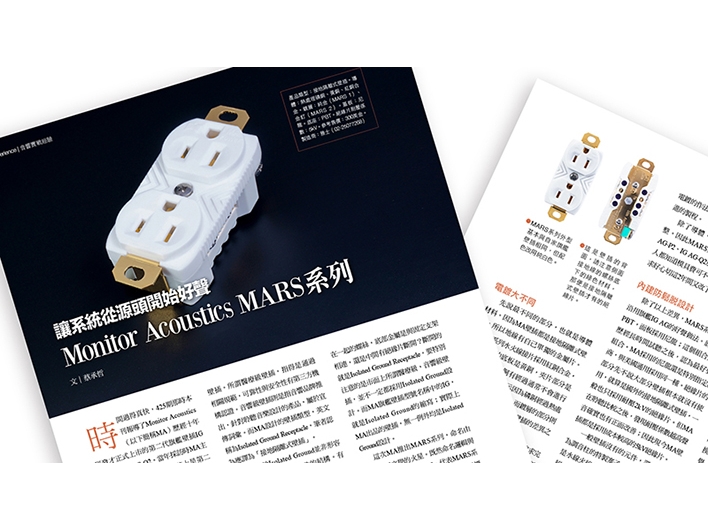
文|蔡承哲
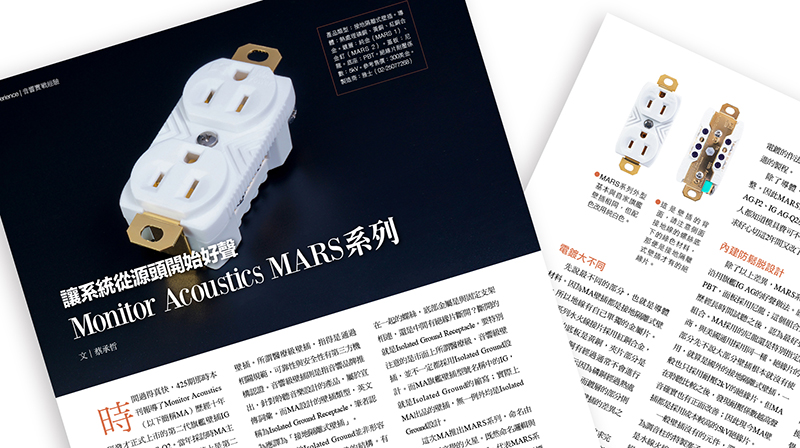
時間過得真快,425期那時本刊報導了Monitor Acoustics(以下簡稱MA)歷經十年研發才正式上市的第二代旗艦壁插IGAG-P2、IG AG-Q2。當年採訪時MA主事者張哿健就透露雖然名義上是第二代,但從模具、結構、材料、製造流程等都與第一代完全不同,是真正從零重新研發的產品。
本來以為開發出IG AG-P2、IG AG-Q2之後,MA會將研發精力放在其他項目上。雖然確實也有其他劃時代的產品正在研發(筆者得先保密),但意外的是MA在研發完第二代旗艦壁插之後又開始研發全新壁插。兩年時間過去,MA正式推出全新壁插MARS系列。
接地隔離
關於壁插這種產品,音響圈中最常見到的字詞應該是醫療級壁插、音響級壁插。所謂醫療級壁插,指得是通過相關規範,可靠性與安全性有第三方機構認證。音響級壁插則是指音響品牌推出,針對聆聽音樂設計的產品,屬於宣傳詞彙。而MA設計的壁插類型,英文稱為Isolated Ground Receptacle,筆者認為應譯為「接地隔離式壁插」。
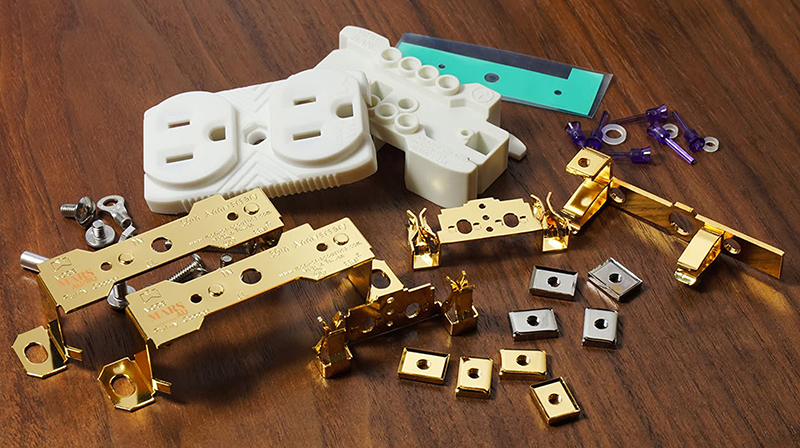
隔離接地Isolated Ground並非形容詞,而是指這種壁插特殊的結構。有些人誤解為只要是具備接地的三孔插座,就可以稱呼為Isolated Ground Receptacle,這其實是不正確的。Isolated Ground Receptacle除了必定是三孔之外,壁插內地線的金屬接片還必須是獨立一片金屬,並和固定用的金屬支架之間有絕緣片隔離開;一般壁插則是固定用金屬支架與地線金屬接片共用同一片金屬。
要辨識是不是Isolated Ground Receptacle的方式很簡單,只需要從側面觀察壁插,觀察用來與牆壁內地線鎖在一起的螺絲,底部金屬是與固定支架相連,還是中間有絕緣片斷開?斷開的就是Isolated Ground Receptacle。要特別注意的是市面上所謂醫療級、音響級壁插,並不一定都採用Isolated Ground設計。而MA旗艦壁插型號名稱中的IG,就是Isolated Ground的縮寫;實際上MA出品的壁插,無一例外均是Isolated Ground設計。
這次MA推出MARS系列,命名由來就是天文學的火星。既然命名邏輯與以往自家壁插完全不同,代表MARS系列並非IG AG系列的低階版,而是目標與定位都不同的產品。實際上MARS系列從開發之初目標就很明確:打造出價格在市場上極具競爭力的優質壁插。MARS系列與IG AG系列的主要差異,其實只有導體部分選用的金屬材料不同,其餘部分基本上直接沿用IG AG系列的材料與設計。
電鍍大不同
先說最不同的部分,也就是導體材料。因為MA壁插都是接地隔離式壁插,所以地線有自己單獨的金屬片。MARS系列水火線接片採用紅銅合金,地線接片的底板是黃銅,夾片部分是磷銅。不過磷銅有經過通常不會進行的熱處理,MA表示因為磷銅經過熱處理可以讓高頻更漂亮。而鍍層的部分則是MARS 1、MARS 2兩款壁插的差異之處;前者鍍金,後者鍍金釕。
說到電鍍,MA在6年前為了追求完美的電鍍品質而投資電鍍廠。因此電鍍這道一般音響品牌會委外進行的工序,MA是不假他人之手自己來。一般音響廠商提到電鍍,多半是宣稱自己產品的鍍層特別厚,遠超一般標準。但對自己有電鍍廠的MA來說,鍍層厚度其實是最容易達成的部分,因為要多厚就只是需要鍍幾次的問題而已。MA也是投資電廠之後,才發覺電鍍時間、研磨方式、研磨材料等差異都會影響聲音。舉個例子,IG AG-Q2剛開始推出時有分為兩個版本,那兩個版本的差異僅僅只是電鍍時間差三秒鐘,但是聲音就已經有可分辨的明顯差異。重點是MARS系列採用的電鍍方式,其實比第二代旗艦壁插更複雜、更精進;畢竟MARS系列開發的這2年,MA也持續研究、精進電鍍的作法,MARS系列因此享有更先進的製程。
除了導體,內中結構也有些微調整。因此MARS系列的模具已經跟IGAG-P2、IG AG-Q2那時又有差異。內行人都知道模具費可不便宜,但MA為了求好心切這2年間又改了數次模具。
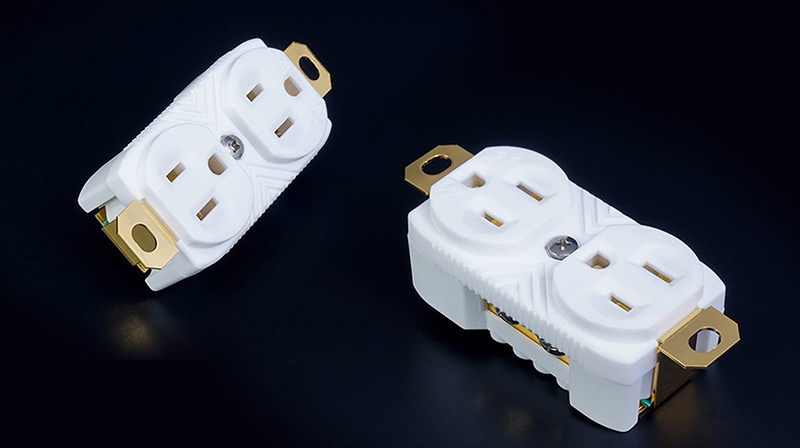
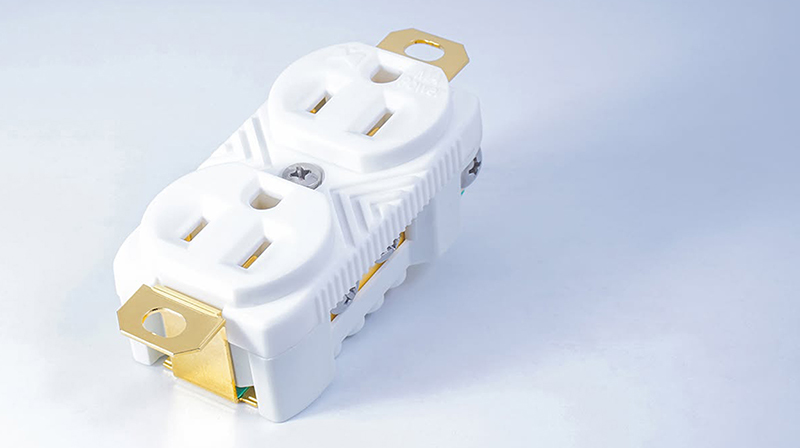
▲ MARS系列外型基本與自家旗艦壁插相同,但配色改用純白色。
內建防鬆脫設計
除了以上差異,MARS系列基本都沿用旗艦IG AG的好聲做法。底座採用PBT,面板採用尼龍;這個組合是MA歷經長時間試聽之後,認為最好聲的組合。MA採用的尼龍還是特別指定廠商,與美國通用採用同一種。絕緣片的部分先不說大部分壁插根本就沒有使用,就算是國外的接地隔離式壁插,一般也只採用耐壓2kV的絕緣片。但MA在聆聽比較之後,發現耐壓係數越高聲音確實也有正面改善;因此現今MA壁插都是採用成本較高的5kV絕緣片。
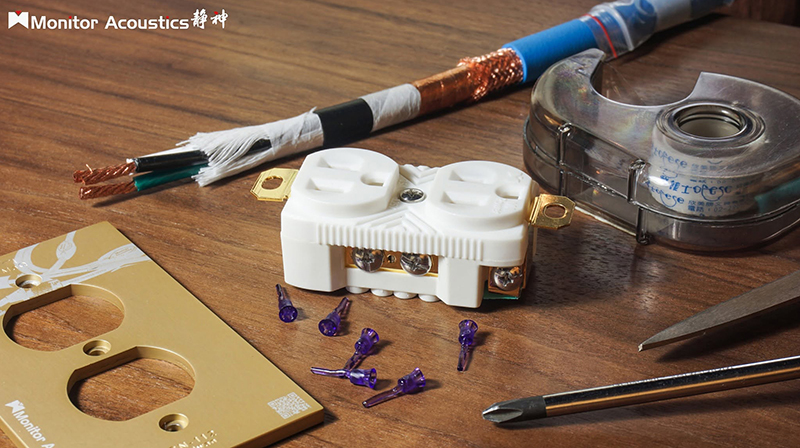
一般壁插沒有的元件,還有MA稱為調音柱的特製塞子。壁插的標準設計是水線火線都各設置4個孔洞接線,但絕大多數情況都只會各用1個。MA這調音柱的功能,就是堵上沒有使用的電線入口,不讓未使用孔洞成為共振來源。
此外MA還在水線內部設計固定結構,讓插頭不容易鬆脫。音響迷一定都懂音響電源線可是會因為線材重量而慢慢「垂頭」,因此還延伸出架線器這種產品,來托住電源端子不讓它鬆脫。MA特別設計的固定結構則可以取代架線器,將電源端子牢牢固定在插座上不鬆脫;唯一的缺點是端子插入時角度一定要垂直。
就連看似不起眼的螺絲,MA也是經過試聽決定的。一般壁插使用的都是銅螺絲,但MA測試過不同材質之後決定採用不鏽鋼。至於最關鍵的螺絲,就是正中央鎖接地銅板那根。MA選擇的是特殊配方的鋁合金,長度也是試聽過後選擇共振最低的長度。
▲ 這是壁插的背面,請注意側面接地線的螺絲底下的綠色材料,那便是接地隔離式壁插才有的絕緣片。
極度寧靜
MARS系列聆聽在雅士民生門市B1試聽室進行,MA所有產品開發試聽都是在此聆聽室進行。聆聽時筆者確實發現產品路線與旗艦IG AG系列有差異;MARS系列極為重視寧靜度,甚至跟印象中的IG AG系列相比,MARS系列背景漆黑感可能還更好一些,不過聲音質感IG AG系列當然還是比較高級。由於MARS系列目標客群是入門、進階音響迷,IG AG系列設定服務的則是頂級系統,訴求自然不同。
至於MARS 1、MARS 2兩款壁插聽感有什麼不同?聽感上MARS 1是將降噪做到極致,就算是從MA其他壁插換成MARS 1都還會有更乾淨一階的感覺,會令人誤以為內部有加裝電源處理器。MARS 2相較於MARS 1更厚實、密度更高;人聲表現最容易聽出來,MARS 2就是更有血有肉,更有真人肉嗓該有的厚度。在聆聽兩款壁插的過程中,發現在系統上兩者搭配使用,聲音會比同一款用兩個更平衡。只不過爭議在於哪款用在訊源、誰用在擴大機上,這點筆者喜好與MA四處請人試聽後的採用順序相反。
雖然筆者在寫此文章時MARS系列才初步開始量產,等到讀者正式拿到此書時可能也才剛開始供貨。不過MARS系列已經有國外訂單了,這次參考定價也是標示國際價格。不過MA告訴筆者為了回饋台灣長期關注MA的音響迷,台灣消費者有特別的7字頭早鳥價。閱讀至此,有興趣者就立刻詢問銷售店家吧!這售價的MARS系列應該就是目前市場上性價比最高的壁插了。
產品類型:接地隔離式壁插。/ 導體:熱處理磷銅、黃銅、紅銅合金。 / 鍍層:純金(MARS 1)、金釕(MARS 2)。 / 蓋板:尼龍。底座:PBT。 / 絕緣片耐壓係數:5kV。 / 參考售價:300美金。 / 製造商:雅士(02-25077268)
Better Sound Starts at the Source
Monitor Acoustics MARS Series
By Cheng-Che Tsai
Time flies. Back in Issue 425, we covered the launch of Monitor Acoustics' (MA) second-generation flagship wall receptacles, the IG AG-P2 and IG AG-Q2. At the time, MA founder Jack Chang revealed that although they were officially considered second-generation products, virtually everything—from tooling and structure to materials and manufacturing processes—had been redesigned from the ground up after nearly a decade of development.
After the launch of the IG AG-P2 and IG AG-Q2, I assumed MA would shift its engineering focus to other projects. While the company has indeed been working on several groundbreaking products (which I unfortunately cannot disclose yet), what surprised me was that MA immediately embarked on the development of an entirely new receptacle platform.
Two years later, that project has become reality: the new MARS Series.
Understanding Isolated Ground
When discussing audio-grade wall receptacles, two terms frequently appear: hospital-grade and audiophile-grade. Hospital-grade receptacles are products certified by independent organizations to meet stringent safety and reliability standards. Audiophile-grade, on the other hand, is largely a marketing term used to describe products specifically designed for audio systems.
The category MA focuses on is known as the Isolated Ground Receptacle.
Many people mistakenly assume that any three-prong outlet with a ground connection qualifies as an isolated-ground receptacle. That is incorrect.
A true isolated-ground receptacle requires more than a grounding terminal. The grounding contact must be electrically isolated from the mounting yoke through a dedicated insulating barrier. In conventional receptacles, the grounding contact and mounting frame are typically formed from the same piece of metal.
One easy way to identify a genuine isolated-ground design is to inspect the side of the receptacle. Look at the grounding screw assembly: if an insulating layer separates the grounding path from the mounting frame, you are looking at a true isolated-ground receptacle.
Interestingly, not all hospital-grade or audiophile-grade outlets employ isolated-ground construction. Every receptacle produced by MA does.
The "IG" designation in the company's flagship models literally stands for Isolated Ground.
Not a Budget Version of the Flagship
The MARS Series takes its name from the planet Mars. The new naming convention signals something important: MARS is not intended as a lower-cost version of the IG AG series.
Instead, it represents a different product philosophy.
From the outset, the design goal was straightforward: create an exceptionally high-performance receptacle with a highly competitive price point.
In fact, the primary difference between the MARS and IG AG series lies in conductor materials. Most of the structural design, materials, and engineering solutions developed for the flagship models have been carried over directly into the new series.
Advanced Plating Technology
The most significant distinction begins with the conductor materials.
Since all MA receptacles utilize isolated-ground construction, the ground contact is physically independent from the hot and neutral contacts.
The MARS Series employs red copper alloy conductors for the hot and neutral blades. The grounding assembly uses a brass base combined with heat-treated phosphor bronze contact springs. According to MA, the heat treatment process improves high-frequency performance and overall sonic refinement.
The two models differ primarily in their plating:
- MARS 1: Gold plating
- MARS 2: Gold-Ruthenium plating
Plating has become one of MA's areas of expertise. Six years ago, the company invested in its own plating facility to gain complete control over the process.
While many manufacturers emphasize plating thickness, MA discovered that variables such as polishing methods, polishing compounds, plating duration, and process sequencing can have equally significant sonic consequences.
One fascinating example comes from the original IG AG-Q2 production. Two versions existed that differed only by three seconds of plating time, yet experienced listeners could clearly distinguish the sonic differences.
The plating process developed for the MARS Series is actually more sophisticated than the one used for the second-generation flagship outlets, reflecting two additional years of research and refinement.
Details Matter
The internal structure has also undergone subtle revisions, resulting in updated tooling and multiple mold revisions during development.
Like the flagship series, MARS utilizes a PBT base combined with a nylon faceplate—a material combination MA selected after extensive listening evaluations. The nylon formulation itself is specially specified and sourced from the same supplier used by major U.S. manufacturers.
Insulation is another area where MA goes beyond industry norms.
While many receptacles use no dedicated insulation barrier at all, and many isolated-ground designs employ insulation rated at only 2kV, MA uses a higher-cost 5kV-rated insulating barrier throughout the lineup. Extensive listening tests reportedly revealed measurable sonic benefits alongside the obvious electrical advantages.
Another unique feature is MA's proprietary "Tuning Plug."
Most receptacles provide multiple wiring entry points for hot and neutral connections, though only one is typically used. MA inserts specially designed plugs into unused openings to minimize resonance and vibration within the assembly.
The company also developed a mechanical retention structure that significantly increases plug grip strength. Audiophiles are well aware that heavy power cables can gradually pull themselves loose over time, which is why cable lifters and support devices have become common accessories. MA's retention mechanism effectively addresses this issue at the receptacle itself, though plugs must be inserted perfectly straight for optimal engagement.
Even the hardware received extensive listening evaluations.
While most receptacles use brass screws, MA ultimately selected stainless steel after comparing multiple materials. The central grounding screw utilizes a proprietary aluminum-alloy formulation, with its length carefully optimized to minimize resonance.
Exceptionally Quiet
Listening evaluations were conducted in the dedicated listening room beneath Yashi Audio's Minsheng showroom, the same room used for MA product development.
What immediately stood out was how different the MARS Series sounds compared to the flagship IG AG line.
The MARS models place extraordinary emphasis on noise reduction and background silence. In fact, they may produce an even darker, blacker background than the flagship series. The IG AG models still retain an advantage in ultimate refinement and tonal sophistication, but that aligns with their intended role in no-compromise reference systems.
The MARS Series targets enthusiasts seeking maximum performance at a more accessible level.
As for the sonic differences between the two models:
MARS 1 prioritizes noise reduction above all else. The perceived drop in background noise can be so dramatic that listeners may initially assume a power conditioner has been added to the system.
MARS 2 offers greater density, weight, and harmonic richness. Vocals in particular gain more body, texture, and lifelike presence.
During listening sessions, I found that combining the two models within the same system often produced the most balanced results. The only debate concerns which should be assigned to source components and which should feed the amplifier—a topic where my personal preferences differed from MA's final recommendation after extensive field testing.
Final Thoughts
At the time of writing, MARS production had only recently begun. By the time this issue reaches readers, shipments may just be entering full-scale distribution.
International orders have already been placed, and the official MSRP has been established at approximately US$300. However, MA is offering special introductory pricing for the Taiwanese market as a gesture of appreciation to local audiophiles who have supported the brand over the years.
After spending time with the MARS Series, I can confidently say that it may well represent one of the strongest value propositions currently available in the world of audiophile-grade wall receptacles.
For listeners who believe great sound starts at the source, the MARS Series deserves serious attention.